
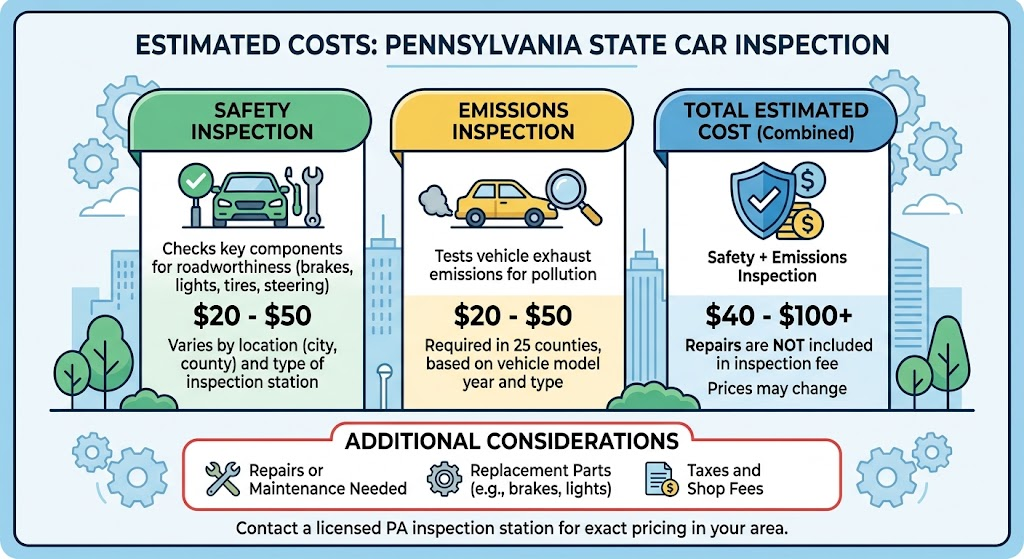
The cost of PA state car inspection is typically about $50 to $100 for a combined safety and emissions inspection, plus tax and any repairs your car needs to pass. Pennsylvania still requires an annual safety inspection, and the price is not one fixed number, because each station sets its own labor fee. This guide breaks down what makes up the bill, how to estimate your total before you go, and how to avoid the surprise costs that catch most drivers.
Prices change, so call your station to confirm the exact figures before you book.
What You Actually Pay For
Your inspection bill is built from a few pieces.
- Safety inspection labor. Set by the station. Many shops charge roughly $35 to $50.
- Emissions test. Only required in certain counties. Where it applies, it is often about $30 to $60.
- State inspection sticker. A fixed fee, currently about $12 for a standard annual sticker.
- Sales tax. Usually applied to the labor portion.
- Repairs. The unpredictable part, and often the biggest.
Estimated total = Safety fee + Emissions fee (if required) + Sticker fee + Tax + Repairs
Here is an illustration with round numbers. A safety inspection at $40, an emissions test at $40, and a $12 sticker come to about $92 before tax. If nothing needs repair, that is your bill. If the brakes or tires fail, the repair becomes the real cost.
Safety Inspection or Emissions Inspection
Every registered vehicle needs a safety inspection each year. The emissions test is an extra step that depends on where you live. It is required in a number of Pennsylvania counties, mostly around larger metro areas. Check PennDOT’s county list or ask your station, because adding the emissions test changes your total.
What Moves the Price Up or Down
- The station. Dealerships often charge more than small independent shops.
- Your county. Emissions requirements add cost in some areas.
- Your vehicle. Larger vehicles and trucks can cost more to inspect.
- Bundles. Some stations discount a combined safety and emissions inspection.
- Repairs needed. A passing car pays for the inspection only. A failing car pays for the inspection and the fix.
Where Inspections Get Expensive
The inspection fee is small compared with a repair bill. These are the most common items that cause a fail:
- Brakes. Worn pads, worn rotors, or brake fluid leaks
- Tires. Tread below the legal minimum, bulges, or uneven wear
- Lights. Burned out headlights, brake lights, or turn signals
- Windshield damage. Large cracks in the driver’s field of view
- Check engine light. Often a fail, especially where emissions testing applies
- Exhaust leaks. Rusted or damaged exhaust parts
- Window tint. Pennsylvania limits how dark tint can be, and tint that is too dark can fail. Before you pay for tint, read about what window tinting costs and keep the legal limits in mind
Staying current on routine service prevents many of these failures. Our VW maintenance schedule is aimed at one brand, but its timeline for brake fluid, tires, and inspections applies to most cars.
A Ten Minute Check Before You Go
Run through this at home the day before. It costs nothing and catches the cheap fixes.
- Test every exterior light, including the brake lights and turn signals
- Check the horn and windshield wipers
- Inspect tread depth on all four tires. The legal minimum is 2/32 of an inch
- Look for large windshield cracks and loose mirrors
- Make sure the gas cap seals tightly
- Check for dashboard warning lights, especially the check engine light
- Confirm the seat belts latch and release
- Look under the car for obvious leaks or a loud exhaust
- Replace burned out bulbs and worn wiper blades yourself, using a few basic maintenance tools
- Gather your registration and insurance card
How to Pay Less
- Call three stations. Ask for the total price, including the sticker and tax, for your exact vehicle.
- Ask about a reinspection policy. Many shops offer a free or discounted recheck within a limited window if you repair the failed items.
- Schedule early. Do not wait until the last day of the month your sticker expires. A rushed visit leaves no time to shop around.
- Get repair estimates in writing. If your car fails, you are not required to have the repairs done at the station that inspected it.
- Compare repair cost with the car’s value. If the repair costs more than the car is worth, selling to a buyer that pays cash for junk cars without a title may be smarter than fixing it.
Timing and Deadlines
Pennsylvania does not give a grace period once your sticker expires, so an expired sticker can earn a ticket the next day. A new sticker is good through the month shown on it. If you buy a vehicle, you generally must get it inspected within a short window after registration, so confirm the timing with PennDOT or your dealer.
What to Bring
- Your vehicle registration card
- Proof of insurance
- Your driver’s license, if the station asks for it
If Your Car Fails
- Ask the station for a written list of what failed
- Get repair estimates from at least one other shop if the cost is high
- Make the repairs within the allowed window, often around 30 days
- Return for a reinspection and ask whether the recheck is free or discounted
Quick Checklist
- Check your sticker month and book early
- Confirm whether your county needs emissions testing
- Call three stations for the all in price
- Do the ten minute home check
- Bring registration and insurance
- Ask about reinspection before you pay
Frequently Asked Questions
How much is a PA state inspection?
Most drivers pay about $50 to $100 for a combined safety and emissions inspection, though stations set their own prices and repairs are extra.
Does everyone in Pennsylvania need an emissions test?
No. Emissions testing applies only in certain counties. Check the county list or ask your station.
Does the state set the inspection price?
The state sets the sticker fee, but each station sets its own labor charge, which is why prices differ.
Can I get a ticket for an expired inspection sticker?
Yes. There is generally no grace period, so you can be cited as soon as the sticker expires.
Do I have to repair my car at the inspecting shop?
No. You can take your car elsewhere for repairs and then return for the reinspection.
Final Thoughts
The inspection fee itself is predictable, but the repair bill is not. Check your car at home, call a few stations, book early, and keep your repair options open. A little preparation can turn an expensive surprise into a routine yearly errand.