
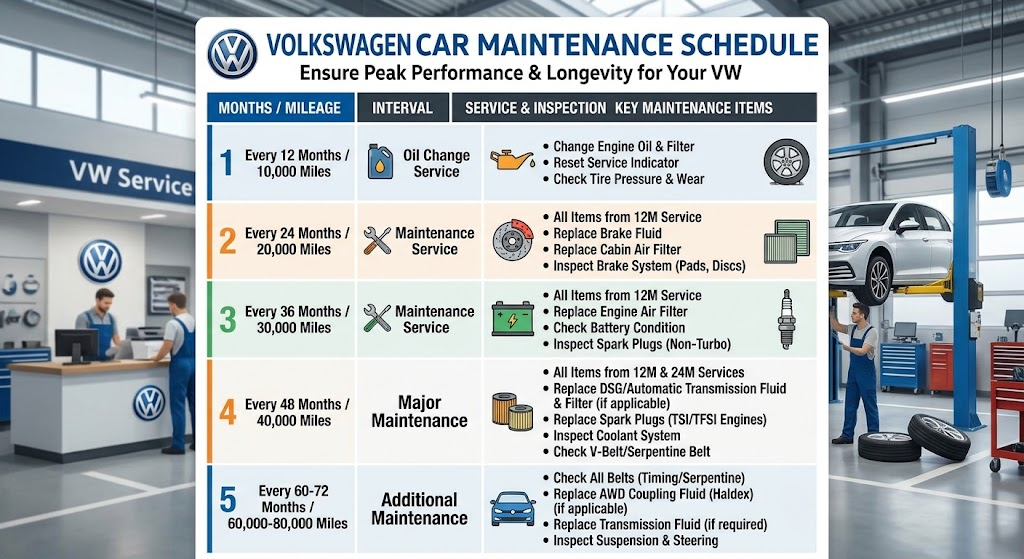
A typical VW car maintenance schedule calls for a basic service every 10,000 miles or once a year, whichever comes first, with larger jobs at 40,000, 60,000, and 100,000 miles. Exact intervals depend on your model, engine, and year, so treat the schedule below as a practical roadmap and confirm the details in your owner’s manual or maintenance booklet.
Volkswagens reward owners who stay on schedule and punish those who guess. A few VW specific services, such as transmission fluid on DSG models and the right approved oil, are easy to miss and expensive to ignore. This guide lays out what to do and when, which items you should never skip, and where you can safely save money.
How to Find Your Exact Schedule
Start with the source that matches your car.
- Owner’s manual or maintenance booklet. It lists intervals for your exact engine and transmission.
- Online owner resources. Volkswagen’s owner site lets you look up details by VIN.
- Dashboard service reminder. Many VWs show a service message based on your driving, but do not rely on it alone. Drive mostly short trips or in heavy traffic, and you may need service sooner.
Older models, turbocharged engines driven hard, and cars used for towing or lots of city driving often need shorter intervals than the standard schedule.
The VW Service Map by Mileage
Use this as a general guide and adjust it to your manual.
Every 10,000 Miles or 1 Year
- Oil and filter change with an oil that meets the VW approval standard listed in your manual
- Tire rotation and tire pressure check
- Inspection of brakes, tires, belts, hoses, lights, and fluid levels
- Check for open recalls and software updates
Every 20,000 Miles
- Cabin air filter replacement
- A closer look at brake pad thickness and rotor condition
- Wiper blades, if streaking or noisy
Around 40,000 Miles
- DSG transmission fluid and filter service, if your car has a DSG automatic
- Engine air filter
- Spark plugs on engines that call for them at this interval
- Extra fluid service on all wheel drive models that use a Haldex system, if your manual lists one
Around 60,000 Miles
- Spark plugs, if not done earlier
- Brake pads and rotors, depending on how you drive
- Battery test and coolant check
- Consider an intake valve cleaning if you drive a direct injection engine and notice rough running or reduced efficiency
Around 80,000 to 100,000 Miles
- Timing belt and water pump, on engines that use a belt instead of a chain
- Suspension inspection, including bushings, mounts, and shocks
- Transmission and drivetrain service as listed in your manual
Beyond 100,000 Miles
- Continue the oil schedule without stretching it
- Inspect and replace aging rubber parts, such as hoses and mounts
- Check the PCV system and cooling system parts for leaks or wear
Time Based Items That Do Not Care About Mileage
Some parts age even if you barely drive.
- Brake fluid: replace about every two years
- Battery: test after four years, and note that some newer VWs need the new battery registered with the car
- Cabin air filter: at least once a year if you drive in dust or pollen
- Tires: inspect for age and cracking, even when tread looks fine
- Coolant: follow the manual, and have it checked sooner if you see low levels or discoloration
VW Specific Watch List
These are the items VW owners most often hear about, and they are worth raising with your mechanic.
- DSG fluid. Skipping this service on a DSG automatic can lead to rough shifts and costly repairs.
- Approved oil only. Engines are designed around specific VW oil standards, such as VW 504 00 or VW 508 00 depending on the engine. The wrong oil can shorten engine life.
- Carbon buildup. Direct injection engines can collect deposits on intake valves over time.
- Plastic cooling parts. Some VW engines use plastic coolant fittings and thermostat housings that can crack with age, so watch for leaks and low coolant.
- Software updates. Certain drivability and shifting issues are corrected with updates, so ask about them at service visits.
- Electric models. If you drive an ID.4, there is no oil to change, but you still need brake fluid, cabin filter, tire, and cooling system care. Our ID.4 review covers what the car is like to own.
Dealer, Independent Specialist, or DIY
Each route has a place.
- Dealer. Best for recalls, software updates, and warranty repairs. Often the highest cost.
- Independent VW specialist. Usually the best balance for out of warranty cars. Look for a shop that works on VWs every day and uses approved parts and fluids.
- DIY. Good for oil changes, filters, wipers, and inspections if you have the right equipment. A few basic maintenance tools go a long way. Leave DSG service, timing belts, and brake work to a pro unless you have real experience.
In the United States, you can generally have routine maintenance done outside the dealer without losing your warranty, as long as you use proper parts and fluids and keep records.
What You Should Never Skip
- Oil changes with the correct approved oil
- DSG fluid service on cars that have it
- Brake fluid replacement
- Timing belt replacement on belt equipped engines
- Coolant leaks or warning lights, which should be checked right away
What You Can Stretch
- Wiper blades, until they stop working well
- Engine air filter, if you drive on clean roads
- Cosmetic items, such as detailing or interior treatments
Keep Records for Warranty and Resale
A folder of service receipts protects you in a warranty dispute and boosts your car’s value when you sell. Appraisers and buyers notice cars with a clear service history, and it is one of the easiest ways to support a better offer, as we explain in our guide to trade in value on my car. Keep paper copies or photos of every invoice, and note the date and mileage.
What Will It Cost
Costs depend on your model, your location, and where you go for service. Dealers tend to cost more than independent specialists, and big services like timing belts or DSG fluid cost more than a routine oil change. Ask for an estimate in writing before approving work, and ask what is required now versus what can wait.
Quick Checklist
- Look up your exact intervals in your owner’s manual
- Note your current mileage and last service date
- Book the next service before the due date
- Use approved oil and parts
- Keep every invoice in one place
- Ask your mechanic about DSG, belts, and software updates
Frequently Asked Questions
How often does a VW need an oil change?
Many newer VWs call for an oil change every 10,000 miles or once a year. Older models or hard use may need it sooner, so follow your manual.
How often should I service the DSG transmission?
Many DSG automatics call for a fluid and filter service around every 40,000 miles. Confirm your interval in the manual.
Do I have to service my VW at the dealer to keep the warranty?
Generally no. You can use a qualified independent shop as long as you use proper parts and fluids and keep records of the work.
Is VW maintenance expensive?
It can cost more than some other brands, mainly because of specific fluids and a few larger services. Staying on schedule usually costs less than repairing a neglected car.
Do electric VWs need maintenance?
Yes, though less. There is no oil to change, but brakes, tires, filters, and cooling systems still need regular attention.
Final Thoughts
A VW rewards owners who treat the schedule as a plan, not a suggestion. Confirm your intervals, use approved fluids, keep clear records, and pay attention to the VW specific items that cause the most expensive surprises. Do that, and your car will be easier to live with and easier to sell.