
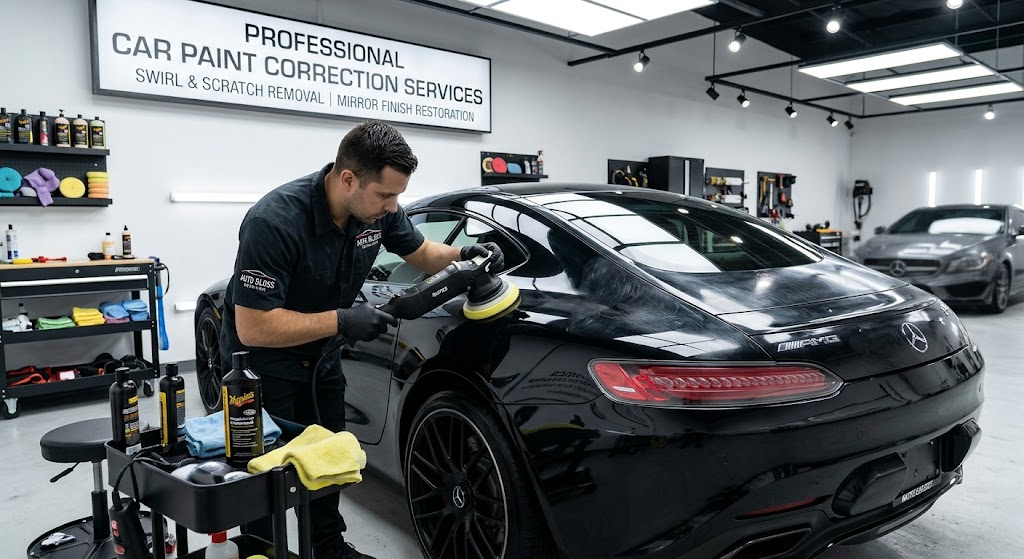
Car paint correction services remove swirl marks, light scratches, and dull oxidation by polishing away a very thin layer of clear coat, so the surface becomes smooth and reflective again. In the United States, professional work typically runs from about $150 for a basic one step enhancement to $2,500 or more for a full multi step correction, depending on vehicle size, paint condition, and your local labor rates.
The tricky part is not finding a shop. It is knowing what level of correction your car actually needs, and how to compare quotes that look similar but include very different work. This guide covers what correction can and cannot fix, a quick way to check your paint at home, how pricing works, and how to choose a provider you can trust.
What Paint Correction Is and Is Not
Paint correction is a machine polishing process. A detailer uses a polisher, pads, and abrasive compounds to level the clear coat, which removes the tiny scratches that scatter light and make paint look hazy.
It is not wax, which only adds a temporary layer of shine. It is not a repaint, which replaces the finish. And it is not a fix for damage that goes past the clear coat, such as deep scratches, rock chips, or peeling paint.
The Two Minute Paint Triage
Before you request quotes, check your car in direct sunlight or under a strong flashlight.
- The light test. Look for fine circular scratches, often called swirl marks, across the panels. These are the most common reason people book correction.
- The fingernail test. Run a fingernail across a scratch. If your nail catches, the scratch is probably through the clear coat, and polishing may only soften it.
- The water test. After washing, see whether water beads or sits flat. Flat, dull paint often points to oxidation or worn protection.
- The depth question. Old paint, past repaints, and thin clear coat limit how much polishing is safe.
Correction can improve light swirls, wash marring, water spots, mild oxidation, and some light scratches. It cannot fix deep scratches, peeling clear coat, or faded paint where the clear coat has failed.
The Three Levels of Paint Correction
One Step Enhancement
One polishing pass that boosts gloss and removes light swirls. It usually takes about three to five hours and costs roughly $150 to $500, depending on the vehicle. It suits newer cars and daily drivers with light defects.
Two Step Correction
A heavier cutting pass followed by a finishing polish. It removes more defects and gives a clearer, deeper finish. Expect roughly $350 to $1,000. For many daily drivers with moderate swirling, this is where the visible transformation happens.
Multi Step Correction
Several passes and sometimes wet sanding on the worst areas. It can take 12 to 20 hours across more than one day and typically costs roughly $600 to $2,500 or more. It is best for dark colored cars, show vehicles, or paint with heavy damage that is still thick enough to work on.
What It Costs and Why
Correction is mostly labor. A simple way to think about it:
Price is roughly hours of work multiplied by the shop’s hourly rate, plus prep and protection
For example, a sedan that needs about eight hours of work at $75 an hour comes to about $600 before add ons. A larger SUV with the same defects needs more time, so the price rises.
What moves the price:
- Vehicle size. Larger vehicles need more time and product.
- Paint condition. Heavy swirling and oxidation take more passes.
- Paint color. Dark colors show defects more, so shops spend more time.
- Service level. Each added stage adds hours.
- Location. Labor rates are higher in major metro areas.
- Add ons. Ceramic coating or paint protection film are usually extra.
The Quote Decoder
Two shops can quote the same number for very different work. A good quote spells out the details.
- The correction level, such as one step or two step
- The estimated hours of work
- The prep included, such as a hand wash, iron decontamination, and clay treatment
- Whether the shop measures paint thickness with a depth gauge before polishing
- What protection is applied afterward, such as a sealant or wax
- How the shop handles areas it cannot safely correct
- Whether the final price is a firm number or a starting price pending inspection
Be cautious if a shop quotes one flat price for every car without looking at yours. Honest providers inspect first, because paint condition decides the work.
Questions to Ask Before You Book
- Can I see photos of your before and after work on cars like mine?
- Do you inspect the paint and measure its thickness first?
- What level of correction do you recommend, and why?
- How many hours will it take, and is the price fixed?
- What protection is included, and how long should it last?
- What happens if you find paint that is too thin to polish safely?
- Are you insured against damage to my car?
Protect the Paint Afterward
Correction exposes fresh, clean paint, and it needs protection to stay that way. Your options, from simplest to most durable, include wax, paint sealant, ceramic coating, and paint protection film. Wax and sealant are affordable and need frequent reapplication. Ceramic coatings last longer and make washing easier. For maximum defense against rock chips and road debris, read about paint protection film.
Is It Worth It
Correction makes the most sense when:
- You plan to keep the car for several more years
- The paint is dark and shows swirls clearly
- The car is new or nearly new and you want to protect a fresh finish
- You are preparing a special vehicle for a show or sale
It may not be worth a full multi step job on an older car you are about to sell. A one step enhancement and a good wash is often enough. Appearance helps, but it rarely returns the full cost at sale, as we explain in our guide to trade in value on my car. Treat it like any cosmetic upgrade, including what window tinting costs: worth it if you will enjoy the result, not only as an investment.
DIY or Professional
A beginner can learn to do a light one step polish with a dual action polisher, a gentle pad, and a finishing polish. The risk is going through the clear coat, especially on edges and body lines, where paint is thinnest. For multi step work, dark paint, or a car you cannot afford to damage, hire a professional. If you try it yourself, gather the right basic maintenance tools and good lighting first, and practice on a hidden panel.
Aftercare That Keeps Results Looking New
- Wash by hand every one to two weeks with a pH neutral soap
- Use clean microfiber towels and the two bucket method
- Avoid automatic brush washes, which can bring swirls back quickly
- Dry gently, without rubbing dirt across the paint
- Reapply wax or sealant on the schedule the product recommends
Quick Checklist
- Check your paint in direct light and run the fingernail test
- Decide whether you need one step, two step, or multi step
- Get at least two written quotes with the details listed above
- Ask about paint thickness checks and protection included
- Confirm the timeline and the final price
- Plan your wash routine before the car comes home
Frequently Asked Questions
How long does paint correction last?
The correction itself is permanent because the defects are removed, but new swirls and scratches can form. How long it looks perfect depends on how you wash and protect the paint.
Is paint correction the same as polishing?
Polishing is the method. Paint correction is the goal of removing defects. A professional correction is a more careful and thorough form of polishing.
Can paint correction remove all scratches?
No. It removes defects in the clear coat. Deep scratches that go through to the base coat or primer usually need touch up or repaint.
Does paint correction damage the paint?
It removes a very small amount of clear coat. Done carefully, with paint thickness checks, it is safe. Done carelessly or too often, it can thin the finish.
How long does it take?
A one step job takes a few hours. A multi step job can take a day or two, depending on the car and the defects.
Final Thoughts
Good paint correction is less about the polish and more about the diagnosis. Check your paint, choose the level your car really needs, compare quotes line by line, and protect the finish afterward. Do that, and you will pay for results instead of for a label.