
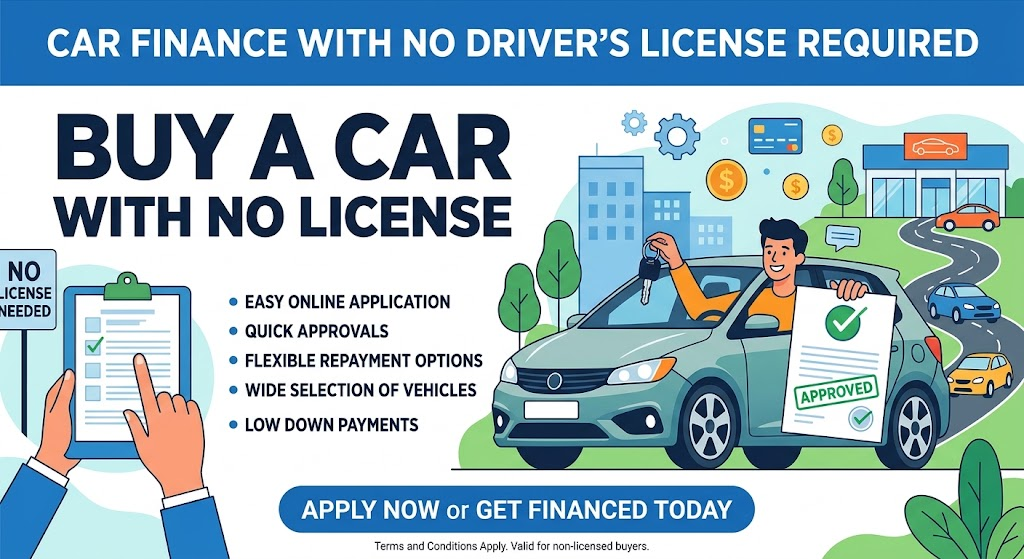
Car finance with no license required is possible in some cases in the United States, because a lender mostly cares about your credit, your income, and a valid ID, not whether you can legally drive today. The catch is that financing is only one piece of owning a car. Registration, insurance, and dealer policies can each add their own requirements.
One rule comes first: owning a car without a license is legal, but driving without a valid license is not. This guide explains what lenders actually check, the situations where financing without a license works, and the steps to take so you do not end up with a car you cannot register or insure.
Financing and Driving Are Two Different Things
When you apply for a car loan, the lender is asking one question: will this person repay the loan? They look at your identity, income, credit history, and the car being used as collateral. A license is a convenient form of ID, but it is not the only form.
The DMV and your insurer ask different questions. They want to know who owns the car, who will drive it, and whether it is covered. Many people get tripped up because they solve the lending problem and then discover the registration or insurance problem afterward.
The Four Gates
Think of buying a car without a license as passing through four gates. Each gate has its own paperwork, and you need to clear all of them.
- Gate 1, Credit. Can you get approved? Lenders look at credit score, income, debt load, and down payment.
- Gate 2, Identity. Can you prove who you are? A state ID, passport, or other accepted documents may be enough for some lenders, but others prefer a license.
- Gate 3, Registration. Can you title and register the car in your name? Rules vary by state, and most states want proof of insurance and acceptable ID.
- Gate 4, Insurance. Can the car be insured, and who is listed as the driver? Lenders typically require full coverage, including collision coverage, for as long as the loan is open.
Before you shop, call a lender, your state DMV, and an insurance agent and ask what each one needs from someone without a license. Twenty minutes of calls can save you a failed purchase.
Which Situation Are You In
Your License Is Suspended, Revoked, or Expired
Some lenders will work with you using a state ID, since the loan is about repayment. Be aware that if your license is suspended or revoked, you cannot legally drive the car, and you will need a licensed person to bring it home. Insurance may cost more or require extra steps, so get a quote first.
You Have Never Had a License
Many people do not drive but still need a car, such as someone with a disability, a family that relies on a licensed relative, or a new driver who has not tested yet. With a state ID, steady income, and decent credit, financing can work. If your credit history is thin, a co signer can help. List a licensed household member as the primary driver on the insurance policy.
You Have a Foreign License or an ITIN
Some lenders and credit unions accept an ITIN or foreign documents in place of a Social Security number or a US license. Expect stricter paperwork and sometimes higher rates. Registration rules differ widely by state, so confirm with your local DMV before you sign.
You Are Buying for Someone Else to Drive
If a parent, spouse, or caregiver will do the driving, be clear about who is the real owner. Buying a car in someone else’s name to hide who actually pays for it, sometimes called a straw purchase, can be treated as loan fraud. Use an honest structure instead, such as a co buyer on the title or an authorized driver on the insurance.
You Are About to Get Licensed
If your test is coming up, consider timing. Getting preapproved first lets you shop with confidence, and finishing your license can open more lender options. If you need a car for the road test itself, our guide on whether you can rent a car for a driving test covers the details.
Co Signer, Co Buyer, or Authorized Driver
These terms are easy to mix up, and the differences matter.
- Co signer. Guarantees the loan but is usually not on the title. If you miss payments, the co signer is legally responsible, and their credit takes the hit.
- Co buyer. Shares ownership and the loan, and is on the title. Both people are responsible.
- Authorized driver. Listed on the insurance as someone who may drive the car. This is about insurance only and has no effect on the loan.
Before asking anyone to co sign, explain the risk clearly. It is a real financial commitment, not a favor without consequences.
Documents Lenders May Ask For
- A state ID, passport, or other government issued photo ID
- Proof of income, such as pay stubs or tax returns
- Proof of address, such as a utility bill
- A Social Security number or ITIN, depending on the lender
- Proof of insurance, usually required before you drive off
- References or a co signer’s information, if requested
Steps to Apply
- Check your credit. Review your reports for errors and know your score before talking to anyone.
- Set a total budget. Include insurance, registration, fuel, and maintenance, not just the monthly payment.
- Get preapproved. Ask credit unions, banks, and online lenders what they accept. Preapproval shows you what you can afford and gives you leverage at the dealership.
- Call dealers ahead of time. Ask whether they sell to buyers without a license. Policies differ, and test drives usually require a licensed driver, so bring a friend.
- Get an insurance quote before you buy. Make sure the car can be insured as planned.
- Plan registration. Ask your state DMV what it needs for titling and registration.
- Read the contract. Check the rate, loan term, fees, and any add ons before signing.
What to Expect on Cost
Buyers without a license often face a higher interest rate, a larger down payment, or a shorter loan term, especially if credit is limited. If you already own a car, putting its value toward the new loan can lower what you borrow. Our guide to trade in value on my car shows how to find a fair number, and our walkthrough of trading in a financed car explains what happens if you still owe money on it.
Red Flags to Avoid
- Dealers that advertise “no license, no problem” but quote very high rates and long terms
- Buy here pay here lots that use tracking devices or remote shutoff, with unclear repossession terms
- Anyone who asks you to use another person’s identity or sign blank forms
- Pressure to add products you did not ask for
- Refusal to show the full contract before you sign
Quick Checklist
- Confirm what your lender, your DMV, and your insurer each require
- Check your credit and set a total budget
- Get preapproved before visiting a dealership
- Arrange a licensed driver for test drives and delivery
- Secure an insurance quote that matches your plan
- Read every line of the contract
Frequently Asked Questions
Can I buy a car without a driver’s license?
Yes, buying is generally legal. Driving it without a valid license is not, so you will need a licensed driver to operate it.
Can I register a car without a license?
It depends on the state. Some states accept other forms of ID with proof of insurance, while others have stricter rules. Check with your DMV before you buy.
Can I get car insurance without a license?
Often yes, but it may require listing a licensed driver as primary or taking extra steps. Some insurers decline, so compare quotes.
Do I need a license to test drive a car?
Almost always. Dealers want a licensed driver behind the wheel, so bring a friend or ask whether a salesperson can drive while you ride along.
Do I need a co signer to finance without a license?
Not always. A co signer helps most when your credit is thin or your income is limited.
Final Thoughts
Financing a car without a license is less about breaking a rule and more about clearing four gates in order. Get approved, prove your identity, make sure you can register the car, and line up insurance that matches who will drive it. Do those four things honestly, and you can buy with confidence instead of discovering problems after you sign.