
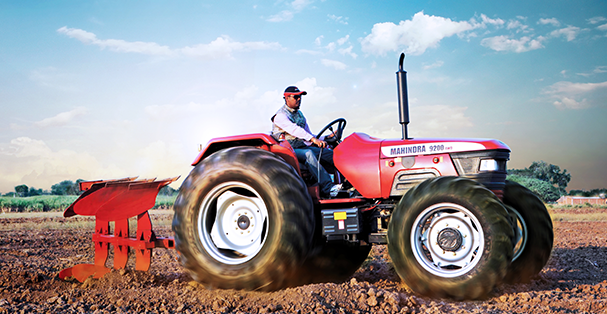
Farming has always been shaped by the tools available to those who work the land. From the earliest ox-drawn ploughs to the first motorised tractors, each technological leap has redefined what farmers can achieve and how efficiently they can achieve it. Today, a new chapter is being written, and tractor technology is at the centre of it.
Modern agricultural tractors are no longer simply powerful machines that pull implements across a field. They are sophisticated, data-driven platforms that help farmers make better decisions, reduce waste, and produce more from every acre they cultivate.
Precision Guidance Is Changing How Fields Are Worked
One of the most transformative developments in modern farming technology is GPS-guided precision steering. Tractors equipped with these systems follow pre-programmed field paths with centimetre-level accuracy, eliminating the overlap and gaps that are inevitable with manual steering.
The practical impact is significant. Less seed is wasted, fertiliser application is more precise, fuel consumption drops, and the operator experiences far less fatigue during long working days. For large-scale farming operations, the cumulative saving across a full season can be considerable.
What was once available only to the largest agribusinesses is increasingly accessible to progressive farmers at all scales, thanks to the efforts of leading farm machinery manufacturers to bring precision technology into mainstream tractor platforms.
Telematics and Remote Monitoring
Modern agricultural tractors increasingly come equipped with telematics systems that track machine performance in real time. Engine health, fuel consumption, operating hours, and service requirements are all monitored continuously and transmitted to a central platform accessible via smartphone or desktop.
Fleet managers overseeing multiple machines across large farming operations can monitor productivity, identify underperforming equipment, and schedule maintenance proactively, before a minor issue becomes a costly breakdown. Remote diagnostics also allow authorised service centres to assess problems without the machine needing to travel to a workshop, reducing downtime significantly.
This level of connectivity represents a fundamental shift in how farm machinery manufacturers design and support their products. The relationship between the manufacturer and the farmer now extends well beyond the point of sale.
Fuel Efficiency and Engine Innovation
Modern farming technology has driven remarkable advances in tractor engine design. Common rail fuel injection systems, turbocharging, and advanced emission control technologies have made today’s agricultural tractors significantly more fuel-efficient than their predecessors, without any reduction in power output.
For a farmer who operates a tractor for hundreds of hours each season, the fuel savings delivered by a modern engine translate directly into lower operating costs and improved profitability. At the same time, reduced emissions align farming operations with increasingly important environmental standards across global markets.
Electrification on the Horizon
The electrification of agricultural tractors is no longer a distant concept. Several of the world’s leading farm machinery manufacturers have already introduced electric and hybrid tractor prototypes, and commercial availability is progressing steadily.
Electric tractors offer near-silent operation, dramatically reduced fuel costs, lower maintenance requirements due to fewer moving parts, and the ability to use renewable energy sources for charging. For horticulture, greenhouse farming, and other applications where noise and emissions are particularly sensitive concerns, electric tractors present a compelling option.
While full electrification of large, high-horsepower agricultural tractors remains a longer-term development, the direction of travel is clear, and the industry is moving purposefully toward it.
Automation and the Autonomous Farm
Autonomous tractor technology is advancing rapidly. Several farm machinery manufacturers have demonstrated fully autonomous tractors capable of performing tillage, seeding, and other fieldwork without an operator on board. Guided by a combination of GPS, cameras, and artificial intelligence, these machines navigate fields independently and stop safely when obstacles are detected.
While widespread commercial adoption is still some years away for most markets, semi-autonomous features, including automated headland turning, implement depth control, and predictive route planning, are already available on modern agricultural tractors and delivering real productivity gains for farmers today.
A Partnership Between Farmer and Machine
The most important shift that modern farming technology has brought about is perhaps a philosophical one. The tractor is no longer just a tool that the farmer operates. It is increasingly a partner in the farming enterprise, generating data, offering recommendations, and helping the farmer work with greater precision and confidence.
For farm machinery manufacturers, this places an enormous responsibility on the quality of engineering, the reliability of digital systems, and the depth of after-sales support they provide. The farmers who invest in modern agricultural tractors are placing their livelihoods in the hands of those who build them.
That is a responsibility worth taking seriously, and the best in the industry are doing exactly that.