

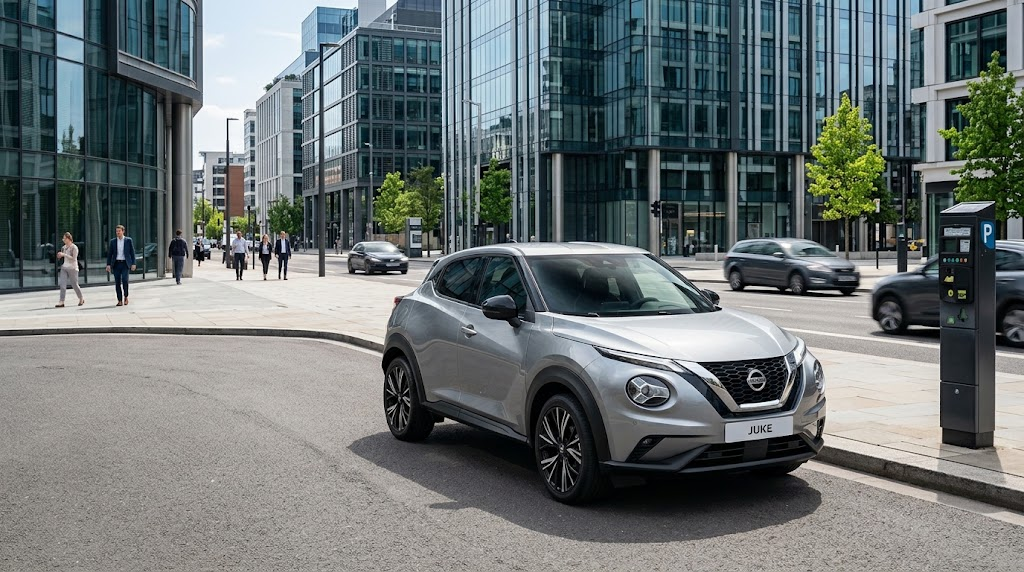
Nissan Juke S: Specs, Model Year Differences and Used Buyer Guide
The Nissan Juke S is the entry point to one of the quirkiest small SUVs ever sold in the US. It has bug eyed styling, a turbocharged engine, and a price that makes it tempting on the used market. It is also a car where the details matter a lot: the model year, the transmission, and the service history can decide whether you get a fun, cheap runabout or an expensive repair bill.
This guide explains what the Juke S actually is, how the 2013, 2014, 2015, and 2017 model years differ, what to check before you buy, and who should skip it.
The Short Answer
- What it is: The base trim of the first generation Nissan Juke, sold in the US from 2011 to 2017.
- Engine: A 1.6 liter turbocharged four cylinder making 188 horsepower.
- Fuel economy: Typically the most efficient Juke trim, rated around 29 MPG combined in the 2013 and 2017 model years.
- Best for: Buyers who want a small, distinctive, fun to drive crossover on a budget.
- Biggest risk: The CVT automatic and the turbo system, so service records and a pre purchase inspection are not optional.
What Does the “S” Mean?
Nissan sold the Juke in several trims: S, SV, SL, and the performance focused NISMO and NISMO RS. The S sits at the bottom, so it has the simplest equipment list. For example, push button start was not available on the S in the 2013 model year, while the higher trims had it.
The upside of the base trim is that it shares the same turbo engine as the SV and SL. You do not give up the fun part of the car. You mostly give up comfort and convenience features, which you can sometimes live without.
Nissan Juke S Specs at a Glance
- Engine: 1.6 liter turbo four cylinder
- Power: 188 horsepower
- Body: Four door subcompact crossover
- Drive: Front wheel drive, with all wheel drive offered on some trims
- Transmission: Mostly a CVT automatic, with a manual offered on some versions
- Fuel economy: Roughly 27 city and 32 highway in 2013, and 28 city and 32 highway in 2017, for front wheel drive S models
Always confirm the exact drivetrain and transmission of the car you are looking at, because all wheel drive Jukes use the CVT and ratings differ by configuration.
Nissan Juke S by Model Year: What Changed
Most buyers search by year, so here is a practical decoder.
2013 Nissan Juke S. Early in the run, with the original styling. Fuel economy on the front wheel drive S was rated about 29 MPG combined. Cars of this age are the cheapest, but they also have the most miles and the longest list of possible wear items.
2014 Nissan Juke S. Essentially unchanged from 2013. The NISMO version became better known around this time, but the S itself stayed the same. If you find a clean 2014 for less than a 2015, it is a reasonable value choice.
2015 Nissan Juke S. The Juke received an exterior refresh with styling tweaks and new colors, and a new top performance trim, the NISMO RS, joined the lineup. If you care about a slightly more modern look, 2015 is the first year to consider.
2016 Nissan Juke S. Not on your keyword list, but worth a mention. It added special Stinger editions and made Siri Eyes Free available on the S, SV, and SL.
2017 Nissan Juke S. The final US model year, carried over mostly unchanged. Rated at about 29 MPG combined on the front wheel drive S. Because it is the newest, it often has the lowest mileage, but also the highest price among the S models.
The rule of thumb: later cars are usually a safer starting point, but a 2013 with full records beats a 2017 with a mystery past.
The Real Cost of Ownership Test (What Most Listings Skip)
A Juke S is cheap to buy, but cheap is not the same as low cost. Before you commit, add up these four numbers:
- Purchase price. What you pay today.
- Known repair risk. Budget for a possible CVT or turbo repair, which can cost more than the car is worth on older, high mileage examples.
- Fuel cost. The S is one of the better Juke trims for MPG, but it still needs premium minded care, so check the fuel recommendation for your car.
- Maintenance catch up. Fluids, spark plugs, and filters that a previous owner skipped.
If the combined total looks too high, a cleaner example at a higher price is often the better deal.
Common Nissan Juke S Problems to Check
No car is perfect, and the Juke has a few well known weak points. Treat these as a checklist, not a verdict.
- CVT transmission. The most discussed issue. Watch for shuddering, hesitation, slipping, or a whining noise. Ask for proof of CVT fluid changes.
- Turbocharger and oil supply. Reports mention clogged oil feed lines, oil consumption, and blue smoke under hard acceleration. Check the oil level and ask how often oil was changed.
- Timing chain wear. A rattle on a cold start can be a warning sign, especially if oil changes were irregular.
- Fuel system and recalls. Some early cars were part of recalls related to a fuel pressure sensor and the turbo air inlet tube. Run the VIN through the official NHTSA recall tool to confirm all work was completed.
- Air conditioning condenser. Its front mounting can expose it to road debris, so test the A/C.
- Suspension and steering. Listen for knocks over bumps and check the tie rods.
- Infotainment glitches. Test the screen and Bluetooth.
If the seller cannot show service records, treat that as a risk factor on its own.
Used Nissan Juke S Test Drive Checklist
- Start it cold. Listen for rattles or rough idle during the first seconds.
- Check the dashboard. Warning lights should come on briefly and then go off.
- Drive in traffic. Pay attention to CVT behavior at low speeds, where shuddering often shows up.
- Accelerate firmly. The turbo should pull smoothly without smoke or hesitation.
- Test all electronics. Windows, locks, screen, climate control, and A/C.
- Look under the car. Check for oil leaks, especially around the turbo area.
- Check the tires. Uneven wear points to alignment or suspension problems.
- Ask for records. Oil changes, CVT service, and any repair invoices.
- Get a pre purchase inspection. Pay an independent mechanic who knows Nissan CVTs and turbo engines.
How to Compare Juke S Listings
- Compare cars, not just prices. A $1,500 difference can disappear after one repair.
- Check the history report. Look for accidents, title brands, and odometer consistency.
- Prefer documented maintenance. Records are worth more than a fresh car wash.
- Ask about the transmission. Find out whether it is a CVT or a manual, and whether the drive is front or all wheel.
- Negotiate with evidence. If the inspection finds issues, use the estimate to adjust the price.
Who Should Buy a Nissan Juke S?
- First time or budget buyers who want something different from the usual small crossover
- City drivers who value a compact footprint and easy parking
- Enthusiasts who like turbo power in a small, quirky body
- Buyers who can inspect carefully and keep up with maintenance
Who Should Skip It?
- Anyone who needs maximum reliability with no surprises. The CVT and turbo are real concerns.
- Families who need a roomy back seat or big cargo space. The Juke is small inside.
- Drivers planning very high mileage. Consider a different model if you expect to put on many miles each year.
Alternatives to Consider
If the Juke’s risks worry you, look at other small crossovers from the same era, such as the Kia Soul, Honda HR-V, or Mazda CX 3. Compare reliability records and used prices for the specific year before you decide.
Maintenance Tips for Juke Owners
- Change the oil on time, using the correct grade, since the turbo depends on clean oil.
- Let the engine settle after hard driving before shutting it off.
- Service the CVT fluid according to a conservative schedule, and ask a mechanic what interval they recommend.
- Replace the air filter and spark plugs on schedule.
- Fix small leaks early.
- Check for open recalls every year.
Final Thoughts
The Nissan Juke S is a distinctive, fun, and affordable way into a turbocharged crossover, and the base trim keeps the same 188 horsepower engine as the pricier Jukes. The trade off is real: it needs careful buying and consistent maintenance. Choose the year that fits your budget, demand service records, run the VIN for recalls, and pay for an independent inspection. Do that, and a Juke S can be a quirky bargain instead of a regret.
FAQ
What is a Nissan Juke S?
It is the base trim of the first generation Nissan Juke, with a 1.6 liter turbocharged four cylinder engine rated at 188 horsepower.
How much horsepower does the Nissan Juke S have?
188 horsepower in the model years covered in this guide.
What is the gas mileage of a Nissan Juke S?
The front wheel drive S was rated around 29 MPG combined in the 2013 and 2017 model years. Your real results depend on drivetrain and driving style.
What is the difference between a 2013 and a 2015 Nissan Juke S?
The 2015 model received a styling refresh, new colors, and was the year the NISMO RS joined the lineup. The core turbo engine stayed the same.
Is the 2017 Nissan Juke S the best year?
It is the final US model year and often has lower mileage, but condition and service history matter more than the badge year.
What are the most common Nissan Juke S problems?
The most talked about are CVT transmission trouble, turbo and oil supply issues, and timing chain wear. Check recalls and service records on any used example.
When did Nissan stop selling the Juke in the US?
The first generation ended after the 2017 model year.
Is the Nissan Juke S a good first car?
It can be if you buy a well maintained example and budget for upkeep. A pre purchase inspection is strongly recommended.